

Why Your Baby Only Sleeps When You Hold Them
/You finally get your baby asleep.
Warm little body curled into your chest. Breathing slows. Eyelids flutter shut. You think, this is it. I did it.
You wait a few minutes to make sure they’re actually asleep, then you carefully transfer them into the bassinet like you’re diffusing a bomb in an action movie… and within ten seconds they’re awake and fussing.
Now you’re sitting in a dark room holding a sleeping baby, feeling like you’re being held hostage because the second you move, the entire operation might collapse.
If this is your life right now, welcome. You have a very normal baby.
Not a spoiled baby.
Not a manipulative baby.
Not a baby “running the house.”
Just a baby acting exactly like a baby does.
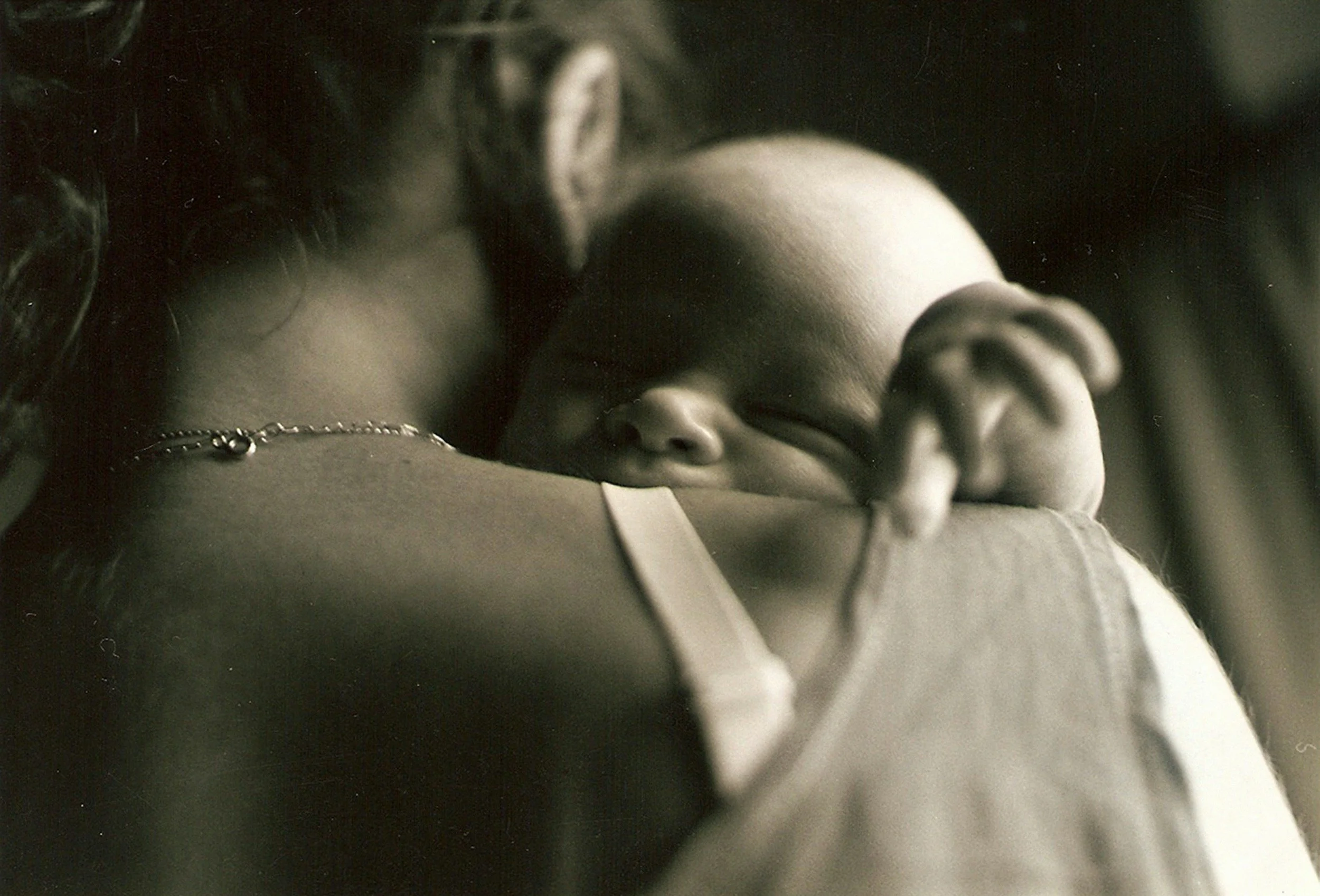
Why Your Baby Wants to Sleep on You
Your baby spent months sleeping inside a warm, noisy, constantly moving environment. Then suddenly they’re placed in a flat, still sleep space by themselves and everyone acts shocked they have something to say about it!
When your baby sleeps on you, they hear your heartbeat, feel your warmth, smell you nearby, and stay regulated by your nervous system and calmed by your presence. They literally feel safer.
That’s why contact naps are so common. That’s why your baby sleeps peacefully on your chest but wakes up offended the second they touch the mattress.
It’s pure biology, not bad habits.
Yes, It Can Become Exhausting
What’s biologically normal can still feel unsustainable.
Sometimes the reality is that you haven’t eaten a meal with two hands in weeks, you’re trapped under a sleeping baby for hours a day, nights involve endless holding, rocking, bouncing, pacing, and praying and you become terrified to transfer your baby because you may have to start the process all over.
Then add sleep deprivation on top of that and everything feels heavier and more overwhelming.
I’ve had moms tell me they stayed awake for hours because they were too afraid to put the baby down and risk another wake-up. Or even once they’re able to get their baby down, they can’t sleep peacefully because the anticipatory anxiety that their baby will wake in just a few minutes prevents them from letting go and falling asleep.
That level of exhaustion catches up with people fast.
Should You Just Keep Holding Them?
Sometimes, in the newborn stage, yes.
Especially in the first few months, a lot of babies genuinely need more support to sleep. Their nervous systems are immature, they wake frequently for feeding, and independent sleep simply isn’t realistic yet for every baby.
But also, no.
Because your baby will take longer to adjust to a specific sleep environment if you never give them the chance to. So, trying to transfer to the basinet at least once a day can be a good start to giving them an opportunity to acclimate to more independent sleep. By that I don’t mean put your baby down and let them cry, but rather, try to transfer and if it’s successful call it a win and try to get some rest. If the transfer doesn’t work, do the contact nap and move on with the day.
While contact sleep is normal, it doesn’t mean you have to stay stuck there forever.
Babies can learn to sleep in their own space. They can learn to connect sleep cycles without needing to fully contact sleep every single time.
The key is understanding the difference between:
what your baby developmentally needs
what they’re used to
and what changes they’re actually ready for
That’s where many families get lost and that’s where a postpartum doula or sleep consultant can step in to help.
When To Start Looking for Sleep Help
When we talk about sleep help for your baby, we don’t mean forcing them to become a robot who sleeps twelve hours independently. What we’re talking about is giving you guidance and creating sustainable rhythms that can ease your baby toward independent sleep so you can stop feeling so exhausted. We’re also talking about helping fill in the gaps of your life so that even if you want to continue contact sleeping, you’re getting cared for in other ways that allow you to get more rest.
Sometimes the answer is more support during postpartum. Sometimes it’s adjusting routines, timing, or sleep habits. Sometimes it’s slowly teaching a baby how to settle with less physical contact over time.
And importantly, that process does not have to mean leaving your baby to cry alone for hours while you spiral in the hallway.
How We Help as Metro Detroit Sleep Coaches and Postpartum Doulas
We are always going to look at the full picture: your baby’s age, feeding needs, temperament, current sleep habits, developmental stage, things that could be preventing peaceful sleep (health issues, apnea, oral ties, etc) your goals as parents, and so much more.
From there, we work with you to create a care plan from either a sleep coach or a postpartum doula that makes sense for you and what you and your baby need.
For younger babies, postpartum doula support often makes the biggest difference. Sometimes parents simply need sleep, recovery support, and help navigating the newborn stage before true sleep training even makes sense.
For older babies, we can start gradually shifting sleep habits so your baby learns they are safe and supported without needing full contact sleep all night long.
It’s important, that you remember that if your baby only sleeps when you hold them, you are not failing. You have a baby whose nervous system wants closeness and regulation. That is incredibly normal.
But if you’re touched out, exhausted, emotionally fried, or starting to dread nighttime, we want to help address that. You deserve care and support just as much as your baby does.
If you’re looking for postpartum doula support, overnight newborn care, or sleep coaching in Detroit, Ann Arbor, Novi, Troy, Lansing, or surrounding Metro Detroit areas, Detroit Dreams Tonight helps families move from survival mode into something that actually feels sustainable.
Everyone needs sleep. Let us help you get some!
